

How does the Volvo wiring harness interact with the engine control unit?
Jun 18, 2025
As a supplier of Volvo wiring harnesses, I've had the privilege of witnessing firsthand how these intricate components interact with the engine control unit (ECU). This interaction is the backbone of a Volvo vehicle's performance, ensuring that every system functions harmoniously. In this blog, I'll delve into the science behind this crucial relationship, exploring the mechanisms, challenges, and advancements that define it.
The Basics of Volvo Wiring Harnesses
Volvo wiring harnesses are the nervous system of the vehicle, transmitting electrical signals between various components. They are composed of multiple wires bundled together, each with a specific function. These wires are carefully insulated to prevent short circuits and interference, and they are routed through the vehicle in a way that minimizes exposure to heat, vibration, and other environmental factors.
The wiring harnesses are designed to be modular, allowing for easy installation and maintenance. They are also engineered to meet the strict safety and performance standards set by Volvo, ensuring that they can withstand the rigors of daily use.
The Role of the Engine Control Unit
The engine control unit (ECU) is the brain of the vehicle, responsible for managing and controlling the engine's operation. It receives input from various sensors located throughout the engine, such as the oxygen sensor, throttle position sensor, and crankshaft position sensor. Based on this input, the ECU calculates the optimal fuel injection timing, ignition timing, and other parameters to ensure efficient and reliable engine performance.
The ECU also communicates with other systems in the vehicle, such as the transmission control unit and the anti-lock braking system, to ensure seamless operation. It uses the wiring harness to send and receive signals between these systems, allowing them to work together in harmony.
How the Wiring Harness Interacts with the ECU
The interaction between the Volvo wiring harness and the ECU is a complex and sophisticated process. The wiring harness serves as the physical connection between the ECU and the various sensors and actuators in the engine. It transmits electrical signals from the sensors to the ECU, and it delivers control signals from the ECU to the actuators.
When a sensor detects a change in the engine's operating conditions, such as a change in temperature or pressure, it sends an electrical signal to the ECU via the wiring harness. The ECU then processes this signal and calculates the appropriate response. It sends a control signal back to the relevant actuator via the wiring harness, instructing it to adjust its operation accordingly.
For example, if the oxygen sensor detects that the engine is running too rich (i.e., there is too much fuel in the air-fuel mixture), it sends a signal to the ECU. The ECU then calculates the correct amount of fuel to inject and sends a control signal to the fuel injector via the wiring harness. The fuel injector then adjusts the amount of fuel it injects into the engine, ensuring that the air-fuel mixture is optimized for efficient combustion.
Challenges in the Interaction
Despite the sophisticated design of the Volvo wiring harness and the ECU, there are several challenges that can affect their interaction. One of the main challenges is electrical interference. Electrical interference can be caused by a variety of factors, such as electromagnetic radiation from other electronic devices, poor grounding, or damaged wiring.
Electrical interference can disrupt the transmission of signals between the sensors, the ECU, and the actuators, leading to inaccurate readings and erratic engine performance. To minimize the risk of electrical interference, Volvo wiring harnesses are designed with shielding and grounding techniques to protect the wires from external electromagnetic fields.
Another challenge is mechanical damage. The wiring harness is exposed to a variety of mechanical stresses, such as vibration, flexing, and abrasion. Over time, these stresses can cause the wires to break or the insulation to wear off, leading to electrical shorts or open circuits.
To prevent mechanical damage, Volvo wiring harnesses are designed with durable materials and protective sheathing. They are also routed through the vehicle in a way that minimizes exposure to mechanical stresses.
Advancements in Wiring Harness Technology
In recent years, there have been significant advancements in wiring harness technology that have improved the interaction between the Volvo wiring harness and the ECU. One of the key advancements is the use of high-speed data communication protocols, such as Controller Area Network (CAN) and Local Interconnect Network (LIN).
These protocols allow for faster and more reliable communication between the ECU and the various sensors and actuators in the engine. They also enable the ECU to receive and process more data in real-time, allowing for more precise control of the engine's operation.
Another advancement is the use of intelligent wiring harnesses. Intelligent wiring harnesses are equipped with built-in sensors and diagnostic capabilities that can detect and report faults in the wiring harness or the connected components. This allows for early detection and diagnosis of problems, reducing the time and cost of maintenance.
Our Products and Their Impact on the Interaction
As a supplier of Volvo wiring harnesses, we offer a wide range of products that are designed to enhance the interaction between the wiring harness and the ECU. Our wiring harnesses are made from high-quality materials and are engineered to meet the strict safety and performance standards set by Volvo.

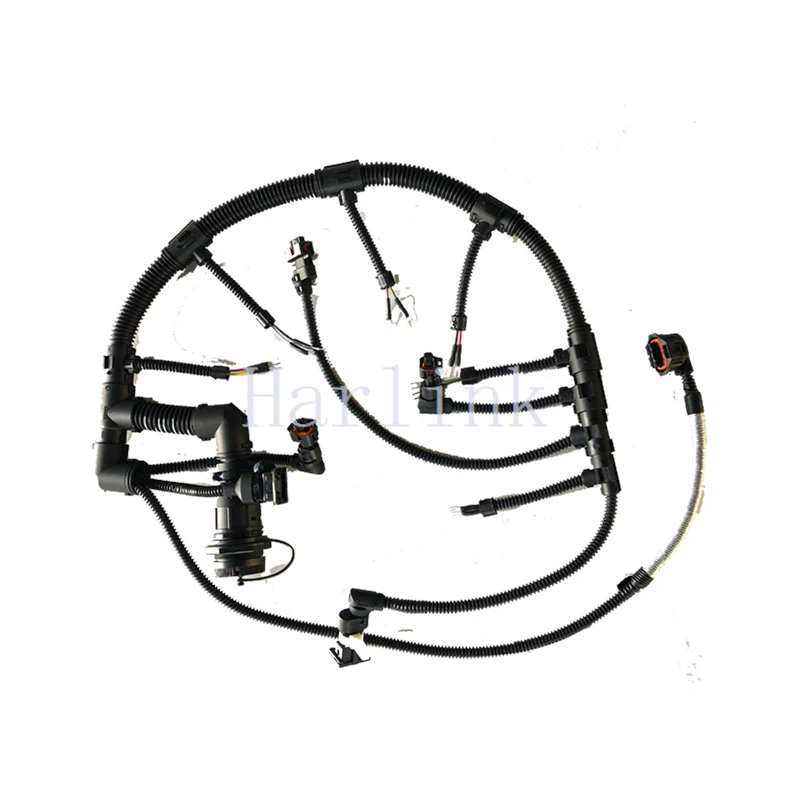
We offer a variety of wiring harnesses for different Volvo models and engine types, including the 21145813 Engine Wiring Harness For Volvo, the 15187835 Wiring Harness for VOLVO D13 Engine, and the 20554258 Injector Wiring Harness For Volvo. These wiring harnesses are designed to provide reliable and efficient communication between the ECU and the engine components, ensuring optimal engine performance.
Our wiring harnesses are also designed with the latest advancements in technology, such as high-speed data communication protocols and intelligent diagnostic capabilities. This allows for faster and more accurate communication between the ECU and the sensors and actuators, leading to improved engine performance and reduced emissions.
Conclusion
The interaction between the Volvo wiring harness and the ECU is a critical aspect of a Volvo vehicle's performance. It ensures that the engine operates efficiently and reliably, and it enables the vehicle's various systems to work together in harmony.
As a supplier of Volvo wiring harnesses, we are committed to providing high-quality products that enhance this interaction. Our wiring harnesses are designed to meet the strict safety and performance standards set by Volvo, and they incorporate the latest advancements in technology to ensure optimal engine performance.
If you are interested in learning more about our Volvo wiring harnesses or if you have any questions about the interaction between the wiring harness and the ECU, please feel free to contact us. We would be happy to discuss your needs and provide you with the information you need to make an informed decision.
References
- SAE International. (2023). Wiring Harness Design and Manufacturing.
- Volvo Cars. (2023). Technical Specifications for Volvo Vehicles.
- Bosch. (2023). Engine Management Systems.