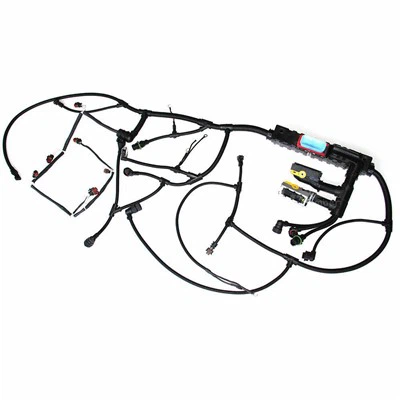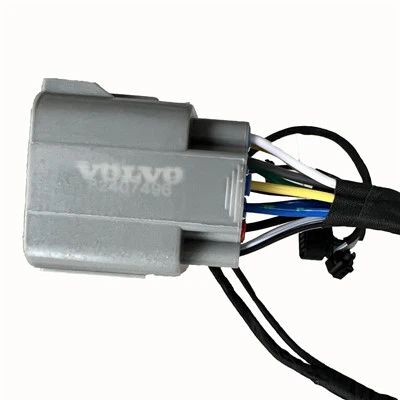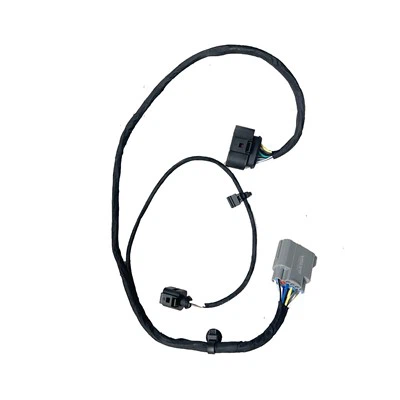
Truck Wiring Harness

What is Truck Wiring Harness


A truck's wire harness connects all the various electrical and electronic components together, providing power and transmitting signals between them. Without a well-designed and reliable , the truck's various systems would not function properly, leading to poor performance and even dangerous situations.A high-quality wire harness needs to be durable and resistant to extreme weather conditions, such as high temperatures, moisture, and exposure to chemicals and other contaminants. This is particularly important for trucks since they operate in different environments.Wire harness should be designed to handle the high levels of voltage and current needed to power the truck's various systems, including the engine, transmission, brake lights, and other components.


Advantages of Truck Wiring Harness
 

Facilitates Application
Cables or wires connected outside a harness are likely to get messy. A wire harness clears the area of clutter and gives electrical transmission a single source of connection, and a tidy, organized appearance. Therefore, it is easier to connect a single group of clamped wires to one connection rather than having numerous wires, each connected to a different set of slots.


Quality & Durability
An important characteristic of wiring harnesses is that they are manufactured using computerized machines reducing the chances of defects. These computerized machines also have a system of automatic testing to make them even more secure. Because of the wiring harness’s innate robustness, there is almost no chance of failure. Such advancements in our electrical engineering systems are one of the biggest ways in which the importance of wire harnessing in industries is visible.


Time-Effective Installation
There are kilometers of wiring required to put together a single piece of equipment. Installing all these wires individually and manually is a daunting task. When all these cables and little parts are integrated into a single apparatus, a tremendous amount of manufacturing time is saved. Such an organized system also reduces the chance of human error.


Secure Connections
When wires and cables are bound together systematically in a single harness, a variety of security issues are resolved. The wires are protected from damage from moisture or abrasions as they have a defined position. Wires placed in a non-flexing bundle ensure the optimal utilization of space. Further, a wiring harness is also extremely functional in preventing short circuits and fires, because the harness is always created inside insulated, secure material.

First 123 Last 1/3


Why Choose Us
01.

Our Factory

HARLINK is a leading provider of customized wiring harness and electrical solutions for various industries. Our company was established in 2007 by a group of experienced professionals with a shared passion for designing and manufacturing high-quality wiring solutions. Over the years, we have grown to become a trusted partner for manufacturers across the globe.

02.

Production Market

Our company's wiring harness products have achieved success in various regions and markets around the world. Our primary sales regions include Europe, North America, and other countries and regions such as the Middle East, South America, and Oceania.

03.

Product Application

Some of the main areas where our wiring harnesses are commonly used include engineering machinery, agricultural machinery, road machinery, heavy trucks, marine vessels, vintage cars, motorcycles, recreational vehicles, aircraft, medical equipment, special equipment, and vehicles. These applications cover various functions such as power transmission, signal transmission, control, and instrumentation.

04.

Our Service

After-sales support is an important part of our commitment to customer satisfaction. We offer technical assistance, training, and troubleshooting to help customers with installation and maintenance, and provide fast and efficient repair and replacement services for damaged or faulty products.


Basic Process of Truck Wiring Harness Design
 

Requirements gathering
The design process starts by gathering the requirements of the wiring harness, including the electrical and mechanical specifications, the target application, and any relevant industry standards.


Study & analyze data pack
Once the requirements are known, the next step is to analyze the data pack, and select the appropriate components, such as wires, connectors, terminals, and other components necessary to build the harness.


Schematic design
The schematic design involves creating a graphical representation of the wiring harness, including the wiring diagram, bill of materials, and any other relevant documentation. The design should take into account the physical space available for the harness, as well as any constraints imposed by the operating environment.


3D routing & material selection (BOM)
3D routing and material selection impact the overall functionality and reliability of the harness. 3D routing involves creating a digital model of the wiring harness that takes into account the physical layout and routing of the wires, connectors, and other components. The Bill of Materials (BOM) lists all the components required to build the wiring harness, including the specific materials and quantities needed for each component.


Flattening & manufacturing documents
Flattening involves carefully mapping out the routing of the wires and connectors, taking into account any bends, twists, or other features that might impact the final shape of the harness. Once the harness has been flattened, manufacturing documents such as from/to table, splice table, connector lists, etc., are created that specify the exact components and materials needed to build the harness.


Prototyping and testing
Once the design is complete, the harness is typically prototyped and tested to ensure that it meets the requirements of the target application and any relevant industry standards.


Production and quality control
Finally, the harness is produced, and a quality control process is implemented to ensure that each harness is manufactured to the same high standards and meets the necessary performance and reliability requirements.


Common Causes of Failing Truck Harness Wires

Wiring harnesses could fail, preventing parts from getting power or connecting to the components they need to operate, due to the following problems:

Battery Terminal Corrosion
Corrosion on the battery terminal could mean it's under or overcharging. This results in an acid layer forming on the battery near the cables, making it hard to conduct electricity. The acid can damage the wires and block electricity.


Thermal Expansion
Thermal expansion is when the wires shorten and tighten due to cold temperatures. It causes the wires to disconnect from the connector, which disrupts the component it's attached to.


Wear and Tear
Older vehicles often have faulty harness wires due to wear and tear, which can cause the harness to stiffen and become more prone to damage.


Chafing
Chafing is when the wires rub together or against other components. It results in damaged wire harness, and could even lead to electrical faults or fire hazards.

22279234 ECU Wiring For Volvo Truck FM11


Cable Assembly vs. Truck Wiring Harness: What's the Difference
 

Cable assemblies and wire harnesses are often confused for being the same thing
The confusion is understandable since many professionals use the terms interchangeably and the products themselves have very similar basic functions. Yet these products are very different from each other, as is their purpose, which means definitions need to be made in order to help people get the products they need.


Cable Assembly vs. Wiring Harness
Before getting into the fighting differences of a cable assembly vs. wiring harness, it's important to note the difference between wire and cable, since these terms are also used interchangeably despite being very different products. Essentially, a wire is a strand of material that conducts electricity, such as aluminum or copper. A cable, by contrast, is two or more wires that run together. They're often bonded or braided together, which is why you see cables that look like bunches of intertwined wires.


The Wiring Harness
At their most basic, wire harne wiring harness are a simple exterior sheath that covers some wires or cables. It's usually made of thermoplastic or thermoset material which helps protect the wires from their environment. For the most part, wiring harness bundle up cables and wires that are already protected by their own exterior sheaths. That means you could open up a wiring harness and see multiple cables with their own coverings, but they're all in a single wiring harness.

Wiring harness are a low-cost electrical solution that's best for keeping electrical systems organized. By bundling wires and cables together, engineers and electrical contractors can keep their wiring systems organized. Since wiring harness are often a low cost organizational tool, they aren't generally able to protect the wires inside from constant friction, temperature swings, or other factors that could cause damage to the wires inside the harness.


The Cable Assembly
Cable assemblies are a group of wires or cables covered by a much more intensive exterior product. In general, they are made from heavy-duty materials, including shrink-wrapped thermoplastic, thermoplastic rubber, or vinyl. These assemblies serve a similar function to wiring harness, including keeping wires and cables organized, but are designed for entirely different environments.Cable Assembly

Cable assemblies are designed for specific environmental factors, including the size of the area where it's being used and the types of environmental factors it's likely to encounter. For this reason, cable assemblies can come in many different shapes and sizes, and are built to shield the interior wires and cables from heat, friction, moisture, abrasion, compression, and other hazards.


How to Replace a Truck Wiring Harness
22279234 ECU Wiring For Volvo Truck FM11
22041549
Engine Wiring Harness for Man
Wire Harness For Truck

Photograph Current Wiring
Take detailed and extensive photos of the current truck wiring harness, connections, and routing. Use masking tape to label each relationship for future reference. Get a shop manual, then study the truck wiring diagram. Take note of the wires' color codes. Over time, the wire colors will fade, and the stripes grow increasingly illegible.


Disconnect and Remove the Battery
Use a socket wrench to get rid of terminal clamps. Begin with the negative, then move to the positive. Hold down the brackets that hold the battery in position. Steer clear of stray sparks by setting the battery outside while placed at a significant distance from the truck.


Systematically Remove the Current Harness
Work through the individual connections of the harness. Get rid of the primary bulkhead connection situated at the firewall. This is where the harness plugs onto the vehicle to connect to the truck central computer.

The majority of the truck connections are snap-in plugs. Still, use a tiny screwdriver and socket to eliminate assorted retainers and clips that hold the harness in position and unbolt the starter wiring and alternator. The knock sensors, crank sensors, and other hidden sensors may be difficult to reach and easily overlooked. So be thorough and work methodically.


Jack Up the Vehicle
Lower the vehicle onto the stands. Remove the wire connections underneath the truck. Separate harnesses such as the truck fan harness and lights harness will be intertwined with the truck harness. Separate and isolate these as it may not be necessary to remove them.


Label New Connections
Use masking tape to label new harness connections based on the labels, photographs, and documentation of the removed harness. This will save you time and planning. Sort any tangled wires, understand their installation and routing before you can proceed. Once you are done, you can then install the new cables.


Install New Wiring
Install new wiring, connect plugs, then tuck back the wires into their respective conduit or secure them to the truck or chassis. Note that wiring harnesses can be deceptive in terms of split points and wire lengths.

If you finalize wire routing before you connect anything, you may discover that you have too little or too much wire for making connections or snaking around obstacles. Make sure the cables are routed away from exhaust pipes and moving parts. Lower the vehicle, reinstall the battery, start the truck and then inspect the installation.


Truck Wiring Harness Components and Materials Used in Manufacturing


Wire harnesses consist of various components and materials in the manufacturing process. The most common elements include wires, connectors, terminals, and protective sleeves. Wires are typically made from copper or aluminum and are coated with insulation to prevent electrical interference. Connectors join wires and come in various shapes and sizes depending on the application. Terminals are attached to the wire ends to connect them to other components. Protective sleeves to cover the cables provide additional protection from heat, moisture, and other environmental factors.


The materials used to manufacture wire harnesses can vary depending on the application and harness assembly requirements. Common materials include PVC, polyethylene, and polypropylene for insulation and nylon or polyester for protective sleeves. With specific applications where high temperatures or extreme environmental conditions are a concern, using more advanced materials such as Teflon or silicone is common.


Selecting wire harness components and materials is critical to ensuring the harness performs reliably and meets the required specifications. Manufacturers must carefully consider the application and environment of the wiring harness to determine the appropriate components and materials.


How To Storing The Truck Wiring Harness


Although the wiring harness has no effect in the normal storage environment, there are some factors that need to be paid attention to in the process of storage. So what factors need to be paid attention to in the process of storage?  


1. Avoid storing in the open air as much as possible.


2. When the wiring harness is at a low temperature (generally about 5℃and below), do not throw or drop the wire, as it may cause the insulation sheath to crack.


3. When the wiring harness is hoisted and packaged, it is strictly forbidden to hoist several reels at the same time. Since the weight of a roll of electronic wire should be light, it should be packed in a carton for reinforcement. Since the connector of the wiring harness is a plastic part, use a bag to seal it and handle it with care. When storing it on a vehicle, ship, etc., the wire reel should be fixed in a suitable way to avoid mutual collision or overturning, so as to avoid Mechanical damage to the wires.


4. It is strictly forbidden to contact with acids, alkalis and mineral oils, and they cannot be stored in isolation from these corrosive substances. There should be no harmful gases that damage insulation and corrode metals in the warehouse where wires are stored.


5. During the storage period, the wiring harness should be moved once on schedule (once in 3 months in summer, and may be postponed in other seasons as appropriate). When moving, turn the bottom side of the storage plate upwards to prevent the bottom surface from being damp and rotten. And when storing, always pay attention to whether the wire head is intact.


6. The storage period should be limited to the ex-factory period of the product. Generally, it should not exceed one and a half years, and the longest should not exceed two years.


FAQ
 

Q: Why is the wiring harness used in the truck?

A: Truck today are equipped with electronic components that, in addition to the basic operations of moving, turning, and stopping, perform various other functions as well. Wiring harnesses are indispensable in controlling these electronic components, transmitting power and signals to every part of the vehicle.

Q: What does a wiring harness do in a truck?

A: The wiring harness is the combination of electrical cables, or assembly of wires, that connects all electrical and electronic (E/E) components in the automotive vehicle, like sensors, electronic control units, batteries, and actuators.

Q: Can truck run without a wiring harness?

A: Your truck needs more than your engine, and it requires a lot of electricity for certain things to function, like your radio or lights. Beyond that, your battery, starter, and even your alternator run on power, which is provided by the engine. Without an engine wiring harness, you couldn't start your vehicle.

Q: What are the symptoms of a bad engine truck wiring harness?

A: The vehicle does not start when turning the ignition on. Front and/or rear lights flicker or dim. Specific automated/electrical features stop working. Random spikes in voltage and inconsistent start-up issues.

Q: How many wiring harnesses are in a truck?

A: At each one, the wire needs to be cut, stripped, crimped, and fitted into the correct pin in the connector, and all of this is done by hand. Modern vehicles contain close to 40 different harnesses, comprised of roughly 700 connectors and over 3000 wires.

Q: How to check truck wiring harness?

A: If the wires are enclosed in a flexible plastic tube, carefully remove the tube so you can see and feel the wires. Visually inspect each wire, looking for any spots where the plastic covering has worn away, exposing bare copper wire. These are problem areas and need to be repaired.

Q: How to replace wires in truck wiring harness?

A: When wires are broken at a connector, you simply strip the ends and crimp on new connectors. But when they're broken in the middle like this, they need to be spliced. That can be done by using crimp-on butt-splice connectors, by using heat-shrink solder-splice connectors, or by soldering the wires manually.

Q: What are the parts of truck wiring harness?

A: Truck wire harnesses are collections of electrical wires, cables, and subassemblies covered by exterior sheaths that are used to connect devices to their power source. Their sheaths both protect the internal components from environmental hazards—such as physical damage and moisture—and organize them.

Q: How to find a bad wire in truck wiring harness?

A: First, connect the meter in series with each leg of the circuit and touch one end of the meter to each lead wire. If no voltage is present, then the circuit may be open; if there is voltage present on one meter but not on the other, then the circuit may be shorted.

Q: What causes truck wiring harness to catch fire?

A: Factors such as wire cutting, loose connection, incorrect wire diameter, reverse polarity (live wire and neutral wire are connected to incorrect terminals), and poor or ungrounded metal parts of electrical equipment can cause fire, electric shock and electric shock.

We're professional truck wiring harness manufacturers and suppliers in China, specialized in providing high quality customized service. We warmly welcome you to buy high-grade truck wiring harness at competitive price from our factory. Contact us for quotation.

Ploughs Wiring Harness, Wiring Harness for John Deer, Truck Wiring Harness

(0/10)

clearall