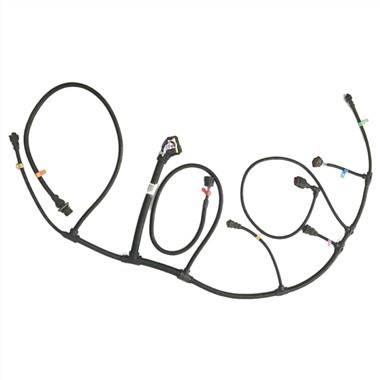
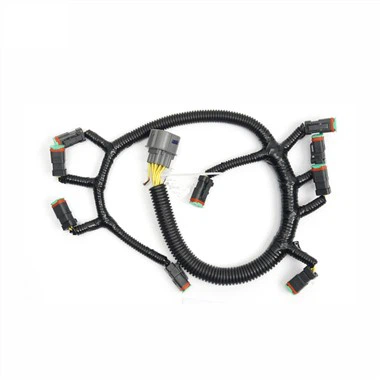
Agriculture Wiring Harness

What is Agriculture Wiring Harness


Agriculture wiring harness must work under high loads and meet stringent requirements resulting from working in a difficult, harsh environment, with variable temperature and humidity. Water resistance is crucial to achieving the maximum extended life cycle of the wiring harness.Equipment and vehicles used agricultural sector utilize wire harness assemblies. The type of wire harness assemblies ensures that heavy machinery, such as tractors and cultivators, since they operate in all seasons.Agricultural equipment, like automobiles, require wire harnesses and cable assemblies to connect many features utilized in a particular piece of equipment together.


Advantages of Agriculture Wiring Harness
 

Ensuring Reliability and Safety in Operations
The primary function of a wire harness in agricultural machinery is to ensure the reliable and safe operation of equipment. By meticulously organizing and protecting wires and cables, a wire harness prevents electrical hazards, such as short circuits and electrical fires, which are critical in the rugged and variable conditions typical of agricultural environments.


Enhancing Performance and Efficiency
A well-designed wire harness directly impacts the performance and efficiency of agricultural machinery. It ensures that electrical signals are transmitted efficiently and reliably between different components of the machinery. This not only improves the response time of the machinery but also enhances its operational efficiency, leading to higher productivity in agricultural practices.


Simplifying Maintenance and Repair
Maintenance and repair are crucial aspects of managing agricultural machinery. A wire harness simplifies these processes by organizing wires and cables into a single, manageable unit. This organization makes it easier to identify and access specific cables for troubleshooting, repairs, or replacement, thereby reducing downtime and maintenance costs.


Supporting Technological Advancements in Agricultural Machinery
As agricultural machinery evolves with technological advancements, the complexity of its electrical systems increases. The wire harness plays a vital role in accommodating this complexity by providing a structured framework for integrating new technologies. Whether it's GPS systems for precision farming, sensors for monitoring equipment health, or automated systems for controlled operations, a wire harness supports these technologies by ensuring organized and efficient connectivity among various components.


Why Choose Us
01.

Our Factory

HARLINK is a leading provider of customized wiring harness and electrical solutions for various industries. Our company was established in 2007 by a group of experienced professionals with a shared passion for designing and manufacturing high-quality wiring solutions. Over the years, we have grown to become a trusted partner for manufacturers across the globe.

02.

Production Market

Our company's wiring harness products have achieved success in various regions and markets around the world. Our primary sales regions include Europe, North America, and other countries and regions such as the Middle East, South America, and Oceania.

03.

Product Application

Some of the main areas where our wiring harnesses are commonly used include engineering machinery, agricultural machinery, road machinery, heavy trucks, marine vessels, vintage cars, motorcycles, recreational vehicles, aircraft, medical equipment, special equipment, and vehicles. These applications cover various functions such as power transmission, signal transmission, control, and instrumentation.

04.

Our Service

After-sales support is an important part of our commitment to customer satisfaction. We offer technical assistance, training, and troubleshooting to help customers with installation and maintenance, and provide fast and efficient repair and replacement services for damaged or faulty products.


How to Choose Agriculture Wiring Harness
 

The size
Another thing you need to consider is the size of the wiring harness. It would be best if you made sure that the wiring harness is big enough to handle the power requirements of your equipment. If it's not, you might end up with a wiring harness that is not up to the task.


The quality of the wiring harness
You need to make sure that you choose a wiring harness made from high-quality materials. The last thing you want is a wiring harness that falls apart after a few uses. It is best to choose a wiring harness made from durable materials that can withstand the test of time. Also, the materials used in the system will affect your choice of a wiring harness. For example, if you use metal components, you will need a wiring harness with shielding to protect against electrical interference. If you are using plastic pieces, you may not need this type of protection.


Type of system
When choosing a wiring harness, you need to consider the type of system it will be used in. There are many different types of systems, and each one has its own set of requirements. For example, if you are using a car stereo system, you will need a different type of wiring harness than if you are using a home theater system.


Size and complexity
The size and complexity of the system will also affect your choice of the wiring harness. If you are wiring a small, simple system, you can use a basic wiring harness. However, if you are wiring a large or complex system, you will need a more advanced wiring harness.


Compatibility
The wiring harness should be compatible with the components it will be connecting. For example, if you are using an aftermarket radio, make sure the wiring harness is consistent with that radio.


Features
When making your decision, you also need to consider the features of the wiring harness. Some wiring harnesses have extra features, such as protection against electrical interference or environmental hazards. Others have a longer lifespan than others. Make sure you choose a wiring harness that has the features you need.


Ease of installation
The ease of installation is another crucial factor to consider when choosing a wiring harness. Some wiring harnesses are easier to install than others. Choose a wiring harness that is easy to install for your needs.


Basics to Know About Agriculture Wiring Harness Design
Ploughs Wiring Harness
Trailers Wiring Harness
Wiring Harness for John Deer
Heavy-Duty Utility Harness

1. Purpose
This is indeed basic, but it's very necessary for designing the most reliable wire harness possible for your application. What do you need your wire-harness design to do, other than transmit electrical signals and power between different components in your system?


2. Wire selection
Always review relevant standards, which provide guidance on the selection of suitable wires for specific applications. This will ensure that the wire you ultimately choose meets the necessary requirements. That said, here are the major factors to consider when designing your wire-harness assembly.

– Wire specifications
What are your electrical requirements? This is determined by the wire's gauge or thickness. Choosing the right gauge wire demands that you consider the carrying capacity and amount of current the wire needs to conduct. This is measured in amps. Length matters too. The longer the wire, the more voltage is lost through resistance and heat. You can get around this problem by increasing your wire gauge, which of course, will increase your amp capacity.

– Environmental conditions
The suitable wire can be used easily in your application's environment. For example, if the harness will be exposed to high temperatures, a wire with a high-temperature rating should be selected. If the harness will be exposed to moisture, then choose a wire with a moisture-resistant coating.

– Mechanical properties
Correct and efficient outputs are also determined by the wire's ability to withstand mechanical stresses. This includes bending or twisting without breaking or losing its electrical properties. The wire should also have good abrasion resistance if it will be exposed to rubbing or scraping.


3. Wire connection
Connectors create an electrical circuit while helping to protect your wires from environmental conditions, such as abrasion and EMI.

The selection of connectors should be based on their electrical and mechanical properties. The wires themselves will influence your connectors, so you'll need to have an idea of the wires' material, gauge and length.

Circuit size and density, along with space limitations, should also be considered. It's also helpful to think of the ease of joining wires and disconnecting wires if necessary. And, of course, do you need insulation?

The termination end type matters too
You'll need the appropriate connectors for board-to-board, wire-to-wire, or board-to-wire. Give thought to your connector hardware too. Your clamping device and other hardware are used to install and support the connector, so it needs to be of excellent quality.


4. Routing
The routing of wires plays a major role in successful cable harness design. First, ensure that wires are routed in a way to make accessibility easy. Optimum positioning is key. You want the harness to be easy to install and maintain. If any wires need replacing or repairing, that should be easy too.

You also need to take into account any potential sources of EMI that could affect the performance of your wiring harnesses. The routing in your cable and wire harness design should minimize the risk of interference and prevent any signal degradation.


5. Strain relief
Designing wire harness assemblies for strain relief will prevent headaches. Failure to do this can result in wires becoming loose or breaking due to vibration, pulling, or other forces. This is especially important in applications where the wire harness is exposed to high levels of mechanical stress.


6. Wire-harness diagram
It's critical to get it right in the early stages, so it's advisable to not attempt your wire-harness diagram by hand. The well-designed wiring diagram is created using a good wire-harness design tool such as computer-aided design or ECAD.

Identify potential issues
With the right software you can improve accuracy and design quality while ensuring you meet industry standards and specifications. These tools can help you identify potential issues, such as wire-to-wire interference, voltage drop, or wire length limitations, which can result in errors or quality issues.

Speeding up the design process
They also speed up the design process and significantly reduce errors and rework. Which integrates seamlessly with its schematic cousin, shows you components from every viewpoint and offers splice balancing functions with comprehensive splice diagram generation, illustrating how to construct each splice. You can add labels in your wire-harness diagram for connectors and splices.

Ensure flexibility
You need to ensure that the wire harness is flexible enough to allow for movement and bending as necessary, while still maintaining its structural integrity. The suite enables you to do this. All of this adds up to tremendous cost savings, helping you optimize the design phase. Manual wiring harness diagrams are simply an inefficient way to work.


7. Protective covering
The wire harness should be covered with a protective sheath or sleeve to protect it from damage. Providing an extra layer of insulation will protect your wires and cables. This involves understanding the environmental conditions the wire harness will be subjected to and the material of your protective covering.


 

Types Of Agriculture Wiring Harness Connectors


1. Blade connectors
The blade connector is one of the most common wire harness connector pins. This connector features flat metal blades or tabs that insert into a corresponding female connector, establishing an electrical connection. Blade connectors are widely used in automotive applications due to their simplicity and ease of installation. They can handle high currents and are available in different sizes to accommodate various wire gauges.


2. Pin connectors
Pin connectors consist of a cylindrical metal pin that fits into a corresponding socket or female connector. These connectors are prevalent in computer and electromechanical devices due to their compact size and reliable connection. A connector pin offers better vibration resistance than blade connectors, making them suitable for mobile and high-shock environments. They are available in various configurations, such as single-pin, multi-pin, and dual inline pin connectors (DIP).


3. Circular connectors
Circular connectors feature a round housing and are widely used in aerospace, military, and industrial equipment industries. They provide multiple pins or sockets arranged in a circular pattern within the housing. Circular connectors are known for their robustness, resistance to environmental factors such as moisture, dust, and vibrations, and high reliability.

They often use threaded coupling mechanisms or bayonet-style locks to secure the connection. These electrical connectors can handle high currents and accommodate various wire sizes.


4. Rectangular connectors
As the name suggests, rectangular wire harness connectors and terminals have rectangular housing and are widely used in industrial and commercial applications. They are versatile and suitable for applications that require multiple wire connections. Board-to-board connectors feature multiple pins or sockets arranged in rows or grids within the housing. They are known for their high contact density, allowing numerous connections within a compact space.

These wire connectors can handle moderate to high currents and are available in various sizes, pin counts, and configurations. Rectangular harness connectors often use locking mechanisms like latches or screws to ensure a secure connection. They are commonly employed in automation, control systems, transmit signals, and electronic signal contacts.


5. Terminal blocks
Terminal blocks are modular connector pins that allow multiple wires to be connected or terminated. They contain an insulating body with metal terminals or screws that secure the wires. Terminal blocks simplify wiring by providing a convenient way to connect and disconnect wires without soldering.

They are commonly used in industrial and electrical distribution applications, where numerous connections must be made. They provide a reliable and secure connection, and their insulation properties ensure electrical safety.


What Causes Agriculture Wiring Harness to Go Bad

A cable harness is an essential component of a agriculture car's electrical system so it must be replaced if not functioning properly. It is an organized bundle of wires, terminals, and connectors that transmit power and information through a vehicle or device. Despite its importance, wiring harnesses are often overlooked when it comes to maintenance and inspection. Here are the 5 main reasons behind their malfunctioning.

Manufacturing defects

One of the primary causes of a faulty wiring harness is manufacturing defects. These defects can include poor-quality materials, incorrect assembly, or inadequate insulation. Manufacturing defects often lead to short circuits, open circuits, or intermittent connections, which can result in a malfunctioning device or even a fire.

01

Corrosion

Corrosion is another common cause of cable harness failure. Exposure to moisture, road salt, and other chemicals can lead to the corrosion of wires, terminals, and connectors. This corrosion can cause increased resistance, which can result in poor performance or even complete failure of the wiring harness that will prevent your agriculture car from starting.

02

Vibration and physical damage

Vibration and physical damage are also significant contributors to wiring harness faults. Constant vibration from a vehicle's engine or rough road conditions can cause the wires to rub against each other or nearby components, leading to insulation wear or broken wires. Physical damage can also result from collisions or improper handling during installation or maintenance.

03

Heat and thermal degradation

Exposure to high temperatures can cause thermal degradation of the cable harness, leading to insulation breakdown and wire damage. This can create short circuits, open circuits, or intermittent connections, potentially causing device malfunctions or even fires.

04

Rodent damage

Rodents, such as mice and rats, can be a surprising cause of wiring harness faults. They are known to chew through insulation and wires, causing short circuits, open circuits, or intermittent connections. Rodent damage can be challenging to diagnose, as it often occurs in hidden or hard-to-reach areas.

05


Maintenance and Care for Agriculture Wiring Harness
 

The longevity of agriculture wiring harness will depend upon its maintenance. By regularly cleaning agriculture wiring harness connectors, it's possible to prevent connectivity issues. Simply wipe the connectors gently with a soft, dry cloth and use an appropriate cleaning agent that allows you to remove dirt, and, thus, prevent corrosion.


It's also important to ensure that all components in the agriculture wiring harness are dry and free from residue. This is to avoid them attracting dust or leading to oxidation. Using compressed air is an effective method for dislodging debris in areas that are hard to reach. You should conduct regular maintenance proactively to mitigate the risks of potential electrical failures and ensure that your systems remain operational and efficient.


Preventive Measures to Protect agriculture wiring Harnesses
Beyond maintenance, it's good practice to take preventive measures to extend the life of your agriculture wiring harness. You can prevent physical damage and degradation by properly securing your agriculture wiring harness and keeping it away from sharp edges or high-temperature areas. Protective sleeving or conduit can also be incorporated to shield the harness from environmental hazards like moisture, chemicals, and UV exposure.


It's also important to regularly check for signs of fraying or insulation damage and address them immediately. By implementing these strategies, you can enhance the durability of your agriculture wiring harnesses and maintain optimal electrical performance.


FAQ
 

Q: What is a harness used for in farming?

A: The type of wire harness assemblies ensures that heavy machinery, such as tractors and cultivators, since they operate in all seasons. Agricultural equipment, like automobiles, require wire harnesses and cable assemblies to connect many features utilized in a particular piece of equipment together.

Q: What happens when the agriculture wiring harness goes bad?

A: A faulty agriculture car wiring harness can lead to a myriad of problems, including poor performance, device malfunctions, and even fires. By understanding the main causes of cable harness faults and taking preventive measures, you can ensure the longevity and reliability of your electrical systems.

Q: What are the different types of agriculture wiring harnesses?

A: Some of the most popularly used wire harnesses are flat harnesses, ribbon harnesses, EMI shielded harnesses, RF harnesses, airborne looms, and military looms. You can choose to have a particular kind of wire harness, based on your application, and the required performance and stability.

Q: What is the process of agriculture wiring harness?

A: The process of producing harness wire consists in precise connection of cables with terminals and insulating elements in a way that allows current to flow from one point to another. This process may include connecting wires with connectors, soldering, gluing, crimping or using other methods of connecting wires.

Q: Why do I need agriculture wiring harness?

A: Agriculture car contain many wires and cables which would stretch over several kilometers if fully extended. By binding them into a cable harness, they can be better secured against the adverse effects of vibrations, abrasions, and moisture.

Q: How do you test agriculture wiring harness?

A: Set the multimeter on the “continuity" setting. Assuming there are multiple wires in the wiring harness, place one probe in one socket of the connector, and then trace that individual wire back to the other end and attach or insert the multimeter's other probe on this end.

Q: What is the difference between a cable and agriculture wiring harness?

A: A wire harness offers a cover that encases single cables, usually from the same material utilized in a cable assembly. One can see and remove an individual cable from a wire harness. In comparison, a cable assembly has multiple wires but is bundled together by a single external sleeve.

Q: How many circuits do I need for agriculture wiring harness?

A: An automotive wiring harness connects all of your car's electrical devices and components to a primary power source. Typically, basic wiring harnesses include a fuse block and a minimum of 8 to 12 circuits.

Q: What do the colors mean on agriculture wiring harness?

A: The protective ground is green or green with yellow stripe. The neutral is white, the hot (live or active) single phase wires are black , and red in the case of a second active. Three-phase lines are red, black, and blue.

Q: How do you know if agriculture wiring harness is bad?

A: These parts should be free from damage, alterations, and contamination—think deep rust, corrosion, sharp edges, cracks, wear, and deformation. Even if the rust isn't extensive, potential damage could still exist, so at the very least, set the harness aside.

We're professional agriculture wiring harness manufacturers and suppliers in China, specialized in providing high quality customized service. We warmly welcome you to buy high-grade agriculture wiring harness at competitive price from our factory. Contact us for quotation.

(0/10)

clearall