Construction Equipment Wiring Harness

What is Construction Equipment Wiring Harness


Construction equipment wiring harness is the combination of electrical cables, or assembly of wires, that connects all electrical and electronic (E/E) components in the automotive vehicle, like sensors, electronic control units, batteries, and actuators. The wiring harness handles the energy and information flow within the E/E system to fulfill primary car functions, such as steering and braking as well as secondary car functions, such as ventilation and infotainment.


Advantages Of Construction Equipment Wiring Harness


Reduces Clutter

Imagine long lengths of wires stretched out over long distances, and compare it with a single wire harness neatly placed instead. Thus, a wire harness reduces clutter and makes the space look neat and organized.


Simplifies Usage

One wire unit is obviously simpler to handle than multiple individual wires. Instead of having so many wires, each connected to different respective slots, it is simpler to connect a single bunch of clamped wires to a single connection. This results in not needing to have multiple connection units, and also not having to remember the respective slot for each individual wire.


Reduces Installation Time

As it is easy to install with just a plug-and-play system, it definitely reduces installation time. So along with reducing clutter and efforts, it also reduces significant amount of time used.


Improves Safety

He cables are well-secured when arranged in a harness. Moreover, the harness is made of insulated material, thus diminishing the chances of short-circuit or fire.

First 1234567 Last 1/9


Why Choose Us
01.

Our Factory

HARLINK is a leading provider of customized wiring harness and electrical solutions for various industries. Our company was established in 2007 by a group of experienced professionals with a shared passion for designing and manufacturing high-quality wiring solutions. Over the years, we have grown to become a trusted partner for manufacturers across the globe.

02.

Production Market

Our company's wiring harness products have achieved success in various regions and markets around the world. Our primary sales regions include Europe, North America, and other countries and regions such as the Middle East, South America, and Oceania.

03.

Product Application

Some of the main areas where our wiring harnesses are commonly used include engineering machinery, agricultural machinery, road machinery, heavy trucks, marine vessels, vintage cars, motorcycles, recreational vehicles, aircraft, medical equipment, special equipment, and vehicles. These applications cover various functions such as power transmission, signal transmission, control, and instrumentation.

04.

Our Service

After-sales support is an important part of our commitment to customer satisfaction. We offer technical assistance, training, and troubleshooting to help customers with installation and maintenance, and provide fast and efficient repair and replacement services for damaged or faulty products.


How Is a Construction Equipment Wiring Harness Created
 

A wire harness is a specially designed system that keeps numerous wires or cables organized. It is a systematic and integrated arrangement of cables within an insulating material.


The purpose of the wiring assembly is to transmit a signal or electrical power. Cables are bound together with straps, cable ties, cable lacing, sleeves, electrical tape, conduit, or a combination thereof.


Rather than manually routing and connecting individual strands, the wires are cut to length, bundled, and clamped to the terminal or connector housing to form a single piece.


The wiring harness is created in two stages. It is designed in a software tool first and then the 2D and 3D layout is shared with manufacturing plants to build the harness.


First, the electrical system engineer provides the functions of the entire electrical system, including the electrical load and related unique requirements. The state of the electrical equipment, the installation location, and the form of connection between the wiring harness and the electrical equipment are all key considerations.


From the electrical functions and requirements provided by the electrical system engineer, the complete vehicle electrical schematic is created by adding components required for a function and connecting them together. The functions which are commonly used across multiple vehicles in an architecture platform are stored together.


After the schematic is defined, the wiring harness design is created. In one platform, the end customers can have a variety of requirements. It is very time-consuming and expensive if different designs are created for each end user's requirements separately. So, the designer takes care of the multiple variants while designing the wiring harness.


At the end, a 2D representation of all the wiring designs is created to show the way different wires are bundled and how the bundles are covered to secure the wires. End connectors are also shown in this 2D diagram.


These designs can interact with 3D tools for the import and export of details. The wire lengths can be imported from the 3D tool and the end-to-end connection details are exported from the wiring harness tool to a 3D tool. The 3D tool uses these data to add passive components such as straps, cable ties, cable lacing, sleeves, electrical tape, and conduits in relevant locations and send them back to the wiring harness tool.


How Do Check the Construction Equipment Wiring Harness
21372691 Engine Hanress For VOLVO Truck
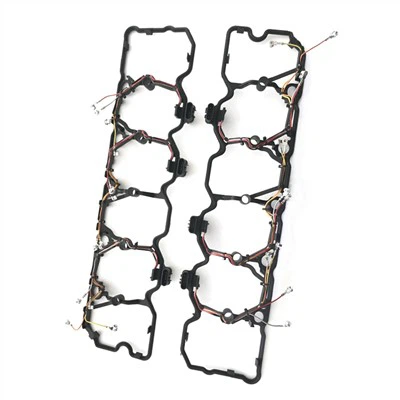
4996667 Engine Gasket
5264951 Valve Cover Injector Harness
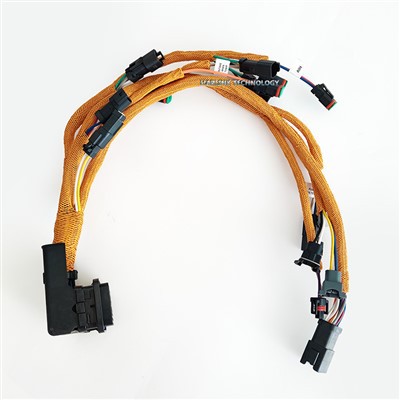
230-0960 Harness For Caterpillar

Visual inspection
Visual inspection is an extremely important aspect of final quality control. Trained personnel carefully inspect each wiring harness for appearance, quality of connector crimping, wire insulation and correct labeling. Any defects, such as asymmetrical crimping or misplaced labels, are identified and recorded.


Strength and functional tests–measurement of breaking strength
During final quality control of an wiring harness, an indispensable tool is an electrical cable tester, whose main purpose is to conduct both strength tests–such as pull force measurement and functional tests. In addition to testing for potential circuit breaks, cable harnesses are subjected to rigorous current and voltage load tests to verify their ability to maintain adequate performance.
Functional testing is also an important aspect to ensure that the wiring harness is operating as designed. The process of testing wire harnesses includes both tensile strength testing and wire continuity testing. As part of these procedures, a cable end break strength meter is used to accurately determine whether an electrical harness can withstand the actions associated with its use. The electrical wire tester plays a key role in the quality control process of wire harnesses, enabling accurate testing of the functionality, strength and integrity of the wires.


Checking insulation
Insulation of wires in an electrical harness is a key aspect of ensuring product safety and reliability. During quality control, it is verified that the insulation is properly made and meets specified safety standards.


Identification and labeling
In this step, inspection is also focused on the correct labeling and identification of wires and connectors in the harness. Ensuring proper labeling and identification facilitates the installation and operation of the wiring harness.


Recording and documentation
All quality control results are carefully documented and recorded. Recording allows results to be tracked and potential problems to be identified, and is important for audit and quality control purposes.


Safety
A key aspect of final quality control is to ensure that the wiring harness is safe to use. Electric harnesses are widely used in a variety of applications, including vehicles, machinery and medical devices, so reliability and quality are essential for the safe operation of these devices.


Construction Equipment Wiring Harness Components


Wire: The wire carries the current or signal that powers a device. The wire's capacity needs to meet or exceed the voltage or bandwidth it's expected to transmit. Most wires are copper and can have a specially chosen coating.


Connectors: Wire connectors are available in several varieties and sizes to connect different types of wires. While they are usually plastic they can be made from a variety of elements including metal and ceramic.


Fuses: Fuses stop surges of power from overloading or damaging devices on the receiving side of the fuse. Different harnesses use different classes of fuses. They are generally rated for 32 volts or less and vary based on their amperage rating.


Grommets: Grommets are insulators to keep moisture out of the connector. A grommet can be attached with the terminal or can be a part of the connector.


Outer coverings/Insulators: Also referred to as tubes and sleeves, insulators provide some degree of abrasion resistance, environmental protection, and protection from electrical shock. They can be made of various materials such as nylon or polyolefin.


Relays: Relays turn higher amperage circuits on or off. This quality allows harnesses to power multiple things. Like fuses, they vary based on amperage requirements.


Strain Relief: Usually added to the outside of the connector. It is designed to prevent the force of pulling of the wires in the connector which could allow the terminal to pull out of the connector making a bad connection. Strain relief can also be added at extreme bend radius which again can put undue force on wire and the terminal inside of the connector


Terminals: Terminals are the metal parts that are attached to the end of the wire to be inserted into the connector or to be attached to a point on the connecting equipment.


Ties: Cable ties and clamps keep the wires inside of the harness attached to from a stream of wires to a particular direction. It can also be used to attach to a structure at fixed points to minimize movement.


Locks: Locks are inserted into the connector to prevent the terminal attached to the wire from being pulled out of the connector. It can also assure complete insertion of the terminal into the connector.


Issues Caused by Faulty Construction Equipment Wiring Harnesses

Faulty wire harnesses may cause different issues within the engine, battery, and other electrical components. Here are some of the common problems you may encounter:


Engine Shutting Down

A corroded wiring harness can cause the engine to turn off. The damage could prevent electricity from reaching the ignition circuit, resulting in the engine getting little to no voltage to function.


Ignition Problems

Issues within the battery cables often cause ignition problems, as they connect the car battery to other electrical systems. If they're faulty, they might not deliver enough energy to power the engine.


Malfunctioning Electrical Parts

A damaged main harness can cause various electrical car components, such as the lights and dashboard, to malfunction. It could be because they're no longer getting enough electricity to work or receiving signals from the parts they depend on.


Application of Construction Equipment Wiring Harness
 
 
Medical Applications

In healthcare, electronic medical equipment, devices, and instruments are subject to heavy use, but also varying degrees of high and low intensity. The wire harness applications used in these devices must be durable, adaptable, and biocompatible. Whether the device is a defibrillator, drill, pacemaker, or imaging or radiological equipment, it must be able to function on demand without failure. Because of the variety of applications, wire harnesses for the medical sector come in all shapes and sizes. They differ from other wire harness assemblies used in other industries in that harnesses for medical applications must be bio-sensitive and in compliance with FDA regulatory controls and guidelines.

 
Agricultural Industries

Much of the equipment and vehicles used in today's agricultural sector utilize wire harness assemblies. The organizational and protective features of wire harness assemblies ensure that heavy machinery, such as tractors and cultivators, operate throughout the year.

 
Manufacturing

Complex wiring, cabling systems, and networks drive automated and robotic production and assembly lines found in today's manufacturing plants and facilities. Wire harnessing applications connect power and signal conductors that control different systems within the same area or along the production line. Wire harnesses ensure connectivity and properly seal cabling and wires to ensure that production is fully optimized.

 
Automotive Applications

To simply start an automobile, truck, motorcycle, tractor, and so on, relies on a variety of electronic controls and electrical devices to transmit signals and electrical power to turn the engine over and achieve ignition. The transmission of those signals is part of an immense wiring network that allows vehicles to function. That functionality is achieved through wire harness applications that connect the engine management system, lighting, power steering, power brakes, audio and entertainment system, electric windows, air conditioning, and so on into an efficiently operating vehicle. With dozens of electronic units on board, it's no surprise that an average car has thousands of wires stretching for over a mile in length to connect devices and operate systems. Wire harnesses are used to connect those devices and deliver electricity and electronic signals through the entire vehicle.

 
Military Applications

Wire harness capabilities for any military application must meet stringent DoD (Department of Defense) specifications. Cabling and wiring used in military equipment is designed for applications subject to extreme environments and conditions. Military wire harnesses must be manufactured with components—wires, connectors, terminals—that are specified and/or approved for demanding military applications.

 
Communication Systems

Global connectivity requires an infrastructure that can send and receive data instantaneously anywhere around the world. Communication systems depend on specialized harnesses for an array of technologies and a wide range of applications. Wire harnesses are integral components in the assembly of hubs, routers, repeaters, modems, peripheral equipment, optical networks, broadband networks, and much more. Wireless communication applications include DSL routers, satellite receivers, and RF.


Construction Equipment Wiring Harness Wire Harness Maintenance Tips
01.

Prevent damage

Birdcage can be prevented, for example, by twisting the insulation at the end of the wire at the same rate and in the same direction as the twist. This twisting makes it easier to solder into the terminal or cup.

02.

Properly dressing the harness

If you get your wires from a wire harness, you may find that they are already well dressed. If not, then you will need to make your own dressing. The dressing makes the wires going in and out of the harness neat and attractive. Strain relief on all terminated ends of the harness makes installation and maintenance easier, while proper routing and shielding ensure that signals reach their intended destination without crosstalk and interference.

03.

Be careful when unbuckling the harness

If you have access to the harness manual, you should be able to see the proper way to disconnect the wire from the harness. The minimum bend radius of the conductor and the required strain relief must be observed during the break. Make sure that the location of the termination and breakpoint allow for gradual bending to the termination. You must never overbend the wire.

04.

Strain relief wire at all terminals

In addition to being important when disconnecting the wire harness, strain relief also helps to terminate the wire. For example, if the electrical cabinet is removable, strain relief on the connector will provide this mobility without damage. This also applies when the temperature changes. Wires typically expand and contract in warm/hot and cold weather, respectively. You need strain relief to accommodate this flexibility. Strain relief can be easily achieved by adding maintenance loops before the termination point.


FAQ
 

Q: What is the purpose of a construction equipment wiring harness?

A: The purpose of a wire harness is to organize individual wires into a single unit to efficiently transmit electrical power and signals. A wire harness reduces labor time and potential for human error, enabling technicians to fit complex wiring assemblies into small or hard-to-reach spaces.

Q: What is the construction equipment construction equipment wiring harness process?

A: The process of producing harness wire consists in precise connection of cables with terminals and insulating elements in a way that allows current to flow from one point to another. This process may include connecting wires with connectors, soldering, gluing, crimping or using other methods of connecting wires.

Q: What are the different types of construction equipment wire harnesses?

A: Some of the most popularly used wire harnesses are flat harnesses, ribbon harnesses, EMI shielded harnesses, RF harnesses, airborne looms, and military looms. You can choose to have a particular kind of wire harness, based on your application, and the required performance and stability.

Q: What is the difference between cable and construction equipment iring harness?

A: The difference between cable assemblies and wire harnesses is that cable assemblies create a path from one point or circuit to another, while wire harnesses connect several points or circuits with multiple breakouts running in different directions, serving multiple functions with multiple terminations on each breakout

Q: What are the components of a construction equipment wiring harness?

A: Wire harnesses consist of various components and materials in the manufacturing process. The most common elements include wires, connectors, terminals, and protective sleeves. Wires are typically made from copper or aluminum and are coated with insulation to prevent electrical interference.

Q: How do you test a construction equipment wiring harness?

A: Set the multimeter on the “continuity" setting. Assuming there are multiple wires in the construction equipment wiring harness, place one probe in one socket of the connector, and then trace that individual wire back to the other end and attach or insert the multimeter's other probe on this end.

Q: How many wires are in a construction equipment wire harness?

A: A construction equipment wiring harness can be very small in size such as a small group of wires found in your computer or car. A construction equipment wiring harness can also be very huge such as some of the ones that InterConnect manufactures for aircraft. These huge construction equipment wiring harnesses may have thousands of wires in them and hundreds of connectors.

Q: How many circuits do I need for a construction equipment wiring harness?

A: An automotive construction equipment wiring harness connects all of your car's electrical devices and components to a primary power source. Typically, basic construction equipment wiring harnesses include a fuse block and a minimum of 8 to 12 circuits.

Q: Can construction equipment wiring harness repair?

A: If the damaged area is over 6 inches (15 cm), the harness can be repaired by adding overlay wiring over the damaged area. NOTE: If damage exceeds 1 inch (2.5 cm) from the terminal end, a quality repair may require adding a jumper wire to create enough slack in the wire.

Q: How long should a construction equipment wiring harness last?

A: Generally, a well-made cable harness should last for many years, if not the lifetime of the vehicle. In automotive applications, a construction equipment wiring harness can last for 15-20 years or even longer, as long as it is not exposed to excessive heat, moisture, or physical damage.

We're professional construction equipment wiring harness manufacturers and suppliers in China, specialized in providing high quality customized service. We warmly welcome you to buy high-grade construction equipment wiring harness at competitive price from our factory. Contact us for quotation.

trenching equipment wiring harness, standard construction equipment wiring harness, mining equipment wiring harness

(0/10)

clearall